Sleep Coaching · 9 min read
Sleep Performance Coach vs Sleep Clinic: Which Is Right for You?
When to choose a sleep clinic first — and when a performance-focused, data-driven sleep coach is the better fit for executives and high performers. A clear, practical guide to making the right call.
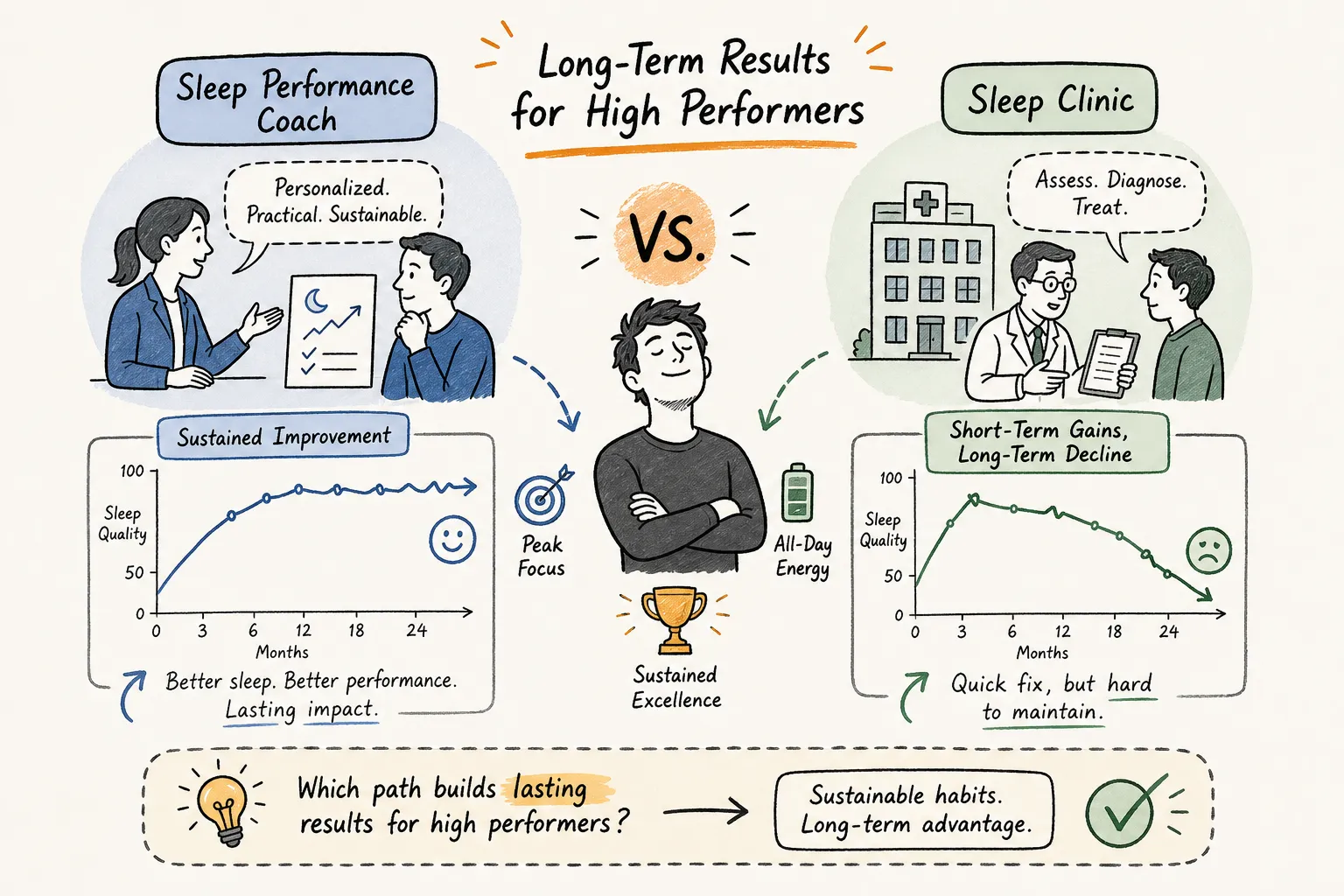
Not every sleep problem starts in the same place — so not every sleep problem is solved by the same person.
If your sleep is broken, the first instinct is often to look for the most serious option available: a sleep clinic, a diagnosis, a medical explanation. Sometimes that is exactly right. Other times it's the wrong door to knock on first, and it delays the work that would actually move the needle.
The honest answer is that sleep clinics and performance coaches solve different problems. Knowing which one matches your situation saves time, money and months of frustration.
Choose a sleep clinic first if…
Some symptoms should be seen by a medical professional before any coaching programme begins. A clinic is the right starting point if you experience any of the following:
Loud snoring combined with daytime fatigue
Witnessed breathing pauses during sleep
Irresistible sleep attacks or falling asleep unintentionally during the day
Regular, unexplained night-time behaviours
Insomnia that has persisted for more than three months with significant daytime impairment
If previous behavioural interventions have failed and your sleep problems are worsening, a clinical assessment must come before any coaching programme. Medical causes must be ruled out before performance optimisation can meaningfully begin.
This is not a limitation of coaching. It is the correct sequence. Treat the medical layer first; then optimise the behavioural and performance layer on top of a clean baseline.
Choose a performance coach if…
If this sounds like your situation, a performance-focused coach is likely the better fit:
You sleep reasonably, but inconsistently
You feel cognitively blunted despite adequate hours in bed
You rely on caffeine to sustain function through the day
You struggle with demanding travel schedules and high cognitive load
The same applies to high performers who have completed clinical treatment and now want structured, data-driven maintenance. Once the medical layer is handled, the work becomes about behaviour, biology and recovery — and that is where a performance coach adds value.
For this group, an evidence-based coaching programme built around biometric data, chronotype, and 1:1 accountability is likely to outperform generic self-help — particularly when delivered by a practitioner with genuine CBT-I training and a structured, measurable protocol.
The decision that actually matters
When weighing a sleep performance coach vs a sleep clinic, the question is not which option sounds more legitimate. It is which option matches your actual situation.
Clinics diagnose and treat medical disorders. Performance coaches optimise behaviour, biology and recovery for people whose problems are functional rather than clinical.
For executives and entrepreneurs who want sustained cognitive performance — rather than simply a reduction in insomnia symptoms — a data-driven coaching programme is the more targeted and enduring solution, provided the coach holds genuine training and works from measurable protocols.
The gap between a sleep-hygiene checklist and a precision performance programme is not marginal. One addresses the surface; the other builds lasting structural change.
Where to start
Sleep Pro Coach is built for high performers who want that level of precision and lasting accountability. Programmes run from four to twelve weeks and are available by application only, keeping the quality of each engagement high.
If you are ready to treat sleep as the performance variable it actually is, that is the place to start.
Coaching Programmes
Ready to put this into practice?
Explore The Sleep Performance Coach coaching programmes — personalised, data-driven sleep performance coaching built around your biology, your data and your goals.
Explore Coaching ProgrammesMore from the resources
Why Your Circadian Rhythm Controls Energy, Focus and Recovery
How your internal biological clock shapes daytime energy, mental focus and overnight recovery — and how to align your routine with it.
Wearable Data · 18 min readHow to Use Oura Ring Data to Improve Your Sleep
Learn what Oura Ring sleep, HRV, resting heart rate and Readiness data really mean — and how to use your trends to improve sleep and recovery.